For sales professionals, prospecting has always been the most time-intensive part of the job. Hours go into researching accounts, drafting outreach, and following up, often before a real conversation ever begins. When the pressure to hit pipeline targets is constant, that effort and that stress might be greater than the results you actually drive.
But generative AI is beginning to change that. Instead of starting from a blank page or a cold list, sales teams can now write tailored messaging and prepare for outreach in minutes rather than days. With AI, the work doesn't disappear; it just becomes more intentional and far more scalable.
Beyond automating the selling process, this shift removes the friction that slows top sellers. When generative AI supports prospecting, reps spend less time preparing and more time engaging.
What you get:
We’ll explore how your sales team can use generative AI for sales prospecting to deliver the most value possible.
What Is Generative AI in Sales Prospecting?
In practice, generative AI acts like a research assistant and writing partner rolled into one. Instead of manually pulling company details or drafting five versions of the same email, reps can use AI to generate the building blocks of outreach in seconds.
For example, before a first touch, a rep might spend 15 to 20 minutes researching an account, and finding out recent funding news, leadership changes, industry trends, etc. With generative AI, all that rich context can be summarized instantly, along with suggested talking points that center the prospect’s role and priorities. Rather than triaging tab after tab, reps get actionable context immediately.
Generative AI also supports consistency at scale. It can recommend subject lines, personalize email openers, adapt messaging across channels, and even suggest follow-up angles based on prior engagement. For teams managing hundreds of accounts at once, this makes personalization instant and personal selling easy.
While generative AI can speed up lots of tasks, we want to stress that it does not (and should not) replace your own judgment as a human. While it may draft content, the rep still makes the final calls as far as what to send, when to send it, and how to move the conversation forward.
When used strategically, generative AI becomes a force multiplier, reducing prep time while helping sellers show up more confidently in every interaction.
Why Generative AI Is Transforming Sales Prospecting
Sales leaders increasingly view AI as more than a “nice-to-have"; it's now a core productivity lever in modern revenue ops (McKinsey & Company). It can help:
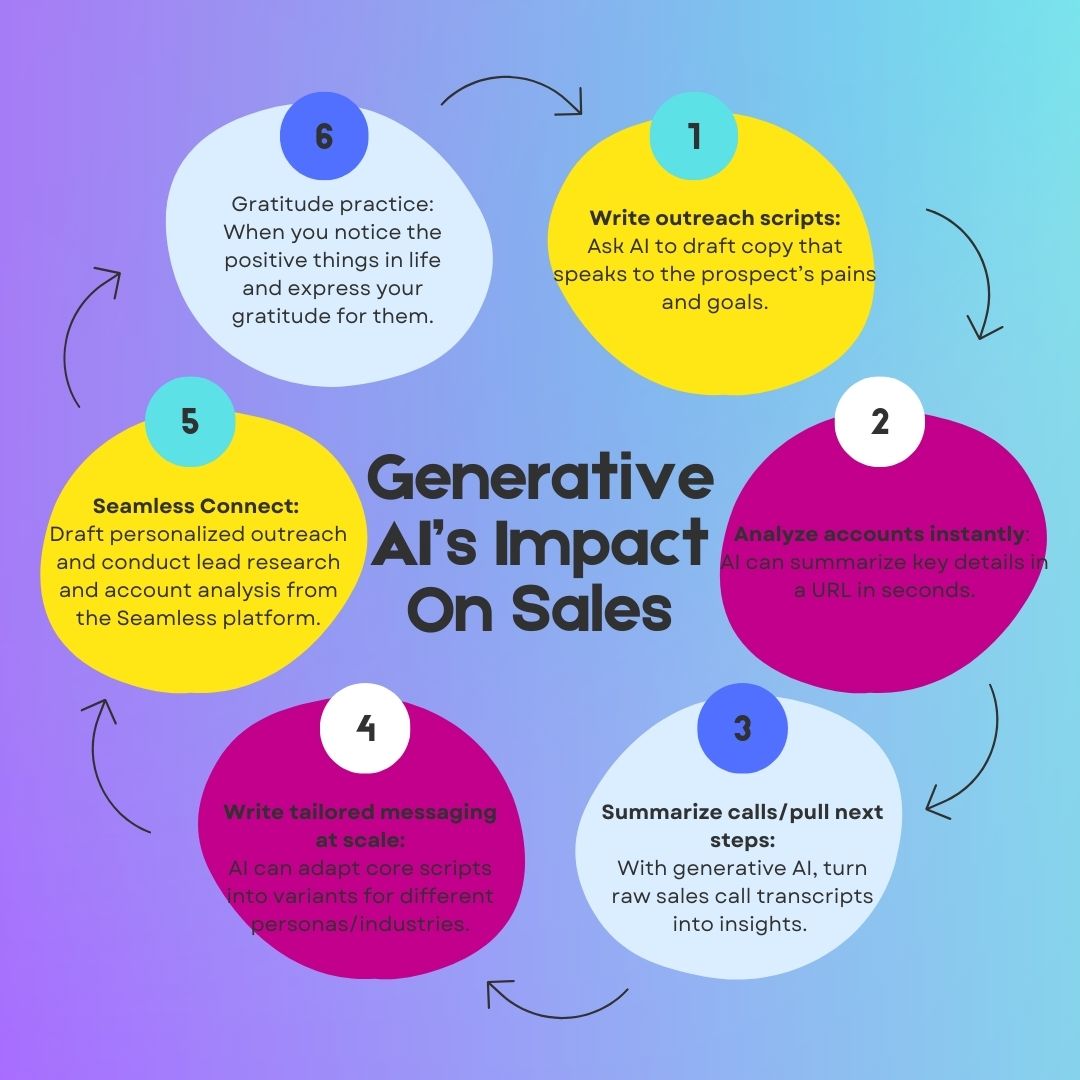
6 ways your sales prospecting could get a boost from AI
Generate outreach scripts – Ask AI to draft email copy, call openings, and social messages that are relevant and speak to the prospect’s role and company news. Instead of starting from scratch or dealing with that dreaded writer’s block, reps get context-aware templates they can use as a hot start to tweak and send.
Analyze accounts instantly – Upload a company name or URL and have AI summarize key details (such as size, recent funding, leadership changes, product news, market signals) all in one place, without you having to scour the internet for the same info.
Research leads faster – Instead of having to manually look up leads, AI can pull public signals and convert them into insights reps use to tailor outreach. This includes firmographics (i.e., industry, location, growth rate, etc.) and behavioral clues that reveal buying intent.
Summarize calls and extract next steps – Post-call, a rep might spend minutes (sometimes hours) writing summaries or follow-ups. With generative AI, you can turn raw audio or notes into key insights and next steps almost instantly.
Build hyper-personalized messaging at scale – AI can adapt core scripts into variants for different segments, personas, or industries.
Seamless Connect can perform a lot of these tasks, from drafting personalized outreach scripts to lead research, and account analysis, all from our platform. If you’re already a user, Connect is free. Just connect your email and phone, sync your CRM, and you’re off to the races with finding the right leads and reaching out at the perfect moment.
At its core, generative AI is a set of capabilities that, when applied strategically, transform how prospecting gets done day to day.
AI for Account Research and ICP Targeting
Before any outreach happens, AI refines how you discover, qualify, and target accounts:
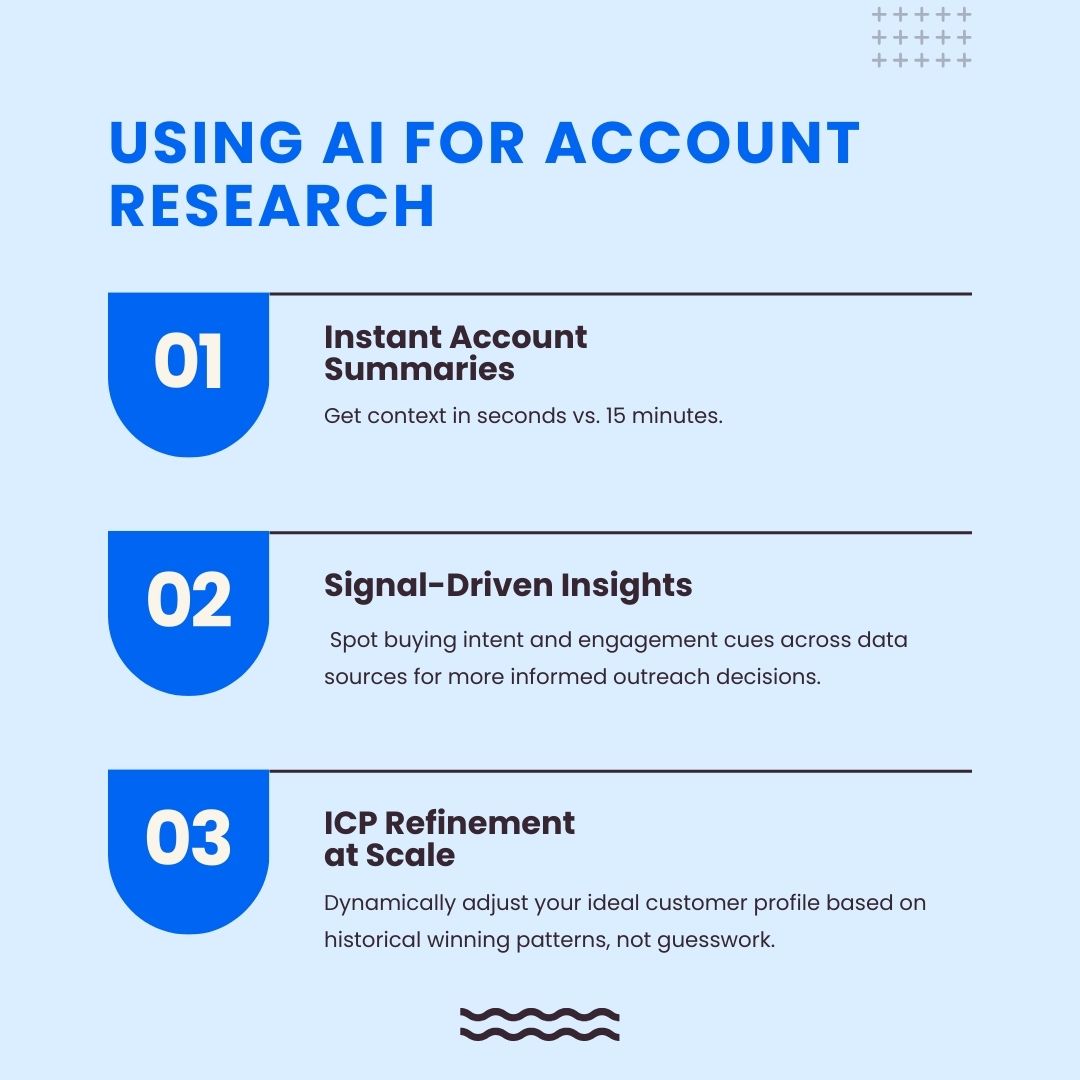
How to target ICP with Generative AI
Instant account summaries make research quick – Instead of 10–15 minutes per account, you get context in seconds (Microsoft).
Signal-driven insights – These help you spot buying intent and engagement cues across data sources, so you can make informed decisions about where to invest your outreach efforts. Seamless Buyer Intent has a minimum match strength that helps you control the leads you find, so you only connect with high-intent leads, not prospects window shopping.
ICP refinement at scale – This enables you to dynamically adjust your ideal customer profile based on historical winning patterns, not guesswork.
Together, these functions make generative AI a workflow enhancer.
AI-Generated Outreach and Follow-Up Workflows
Beyond content creation, generative AI can shape entire touch sequences:
Emails tailored to buyer needs
Social messages that reflect real context
Call scripts based on company insights
Multi-touch sequences adjusted by engagement data
You can also feed responses and behaviors back into the system to optimize message timing, cadence, and content sequencing.
Prospect Prioritization Using Generative AI
Generative AI can even elevate prioritization beyond basic scoring:
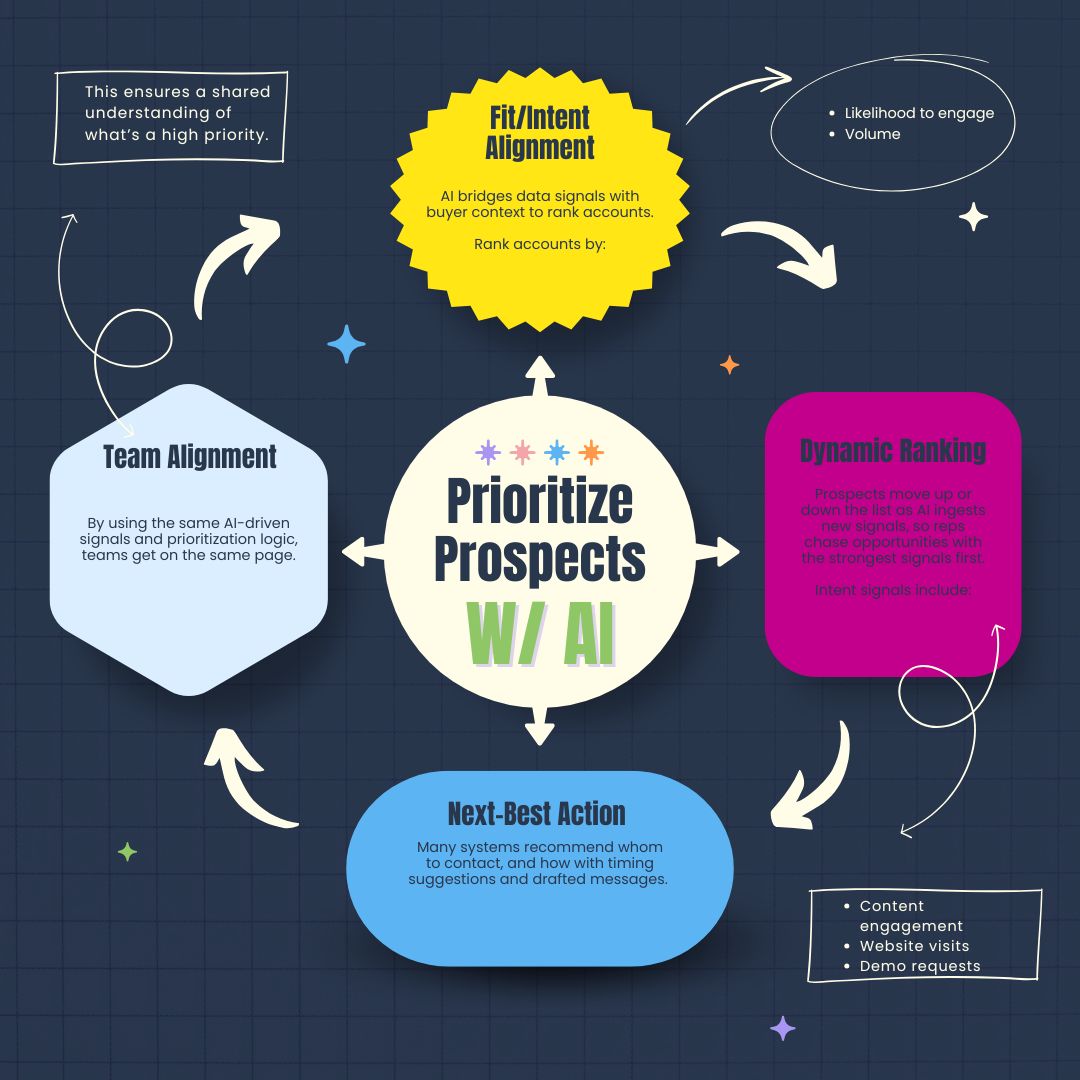
Generative AI is elite for intent prioritizing
Fit/intent alignment – AI bridges data signals with buyer context to rank accounts by the likelihood to engage, not just volume.
Dynamic ranking – Prospects move up or down the list as AI ingests new signals (such as content engagement or website visits), so reps chase opportunities with the strongest signals first. This makes qualification easier, and it also means less wasted time shooting in the dark with cold leads who may never convert.
Next-best action guidance – Many systems now recommend not just whom to contact first, but also how to contact them, by providing draft messaging and timing suggestions.
Consistency across the team – By using the same AI-driven signals and prioritization logic, teams reduce variability between reps. This ensures everyone is aligned and working from a shared understanding of what “high priority” means, leading to more predictable execution.
The result is a sales prioritization engine that helps your reps focus on what matters most.
Best Practices for Using Generative AI in Prospecting
Generative AI can deliver massive value, but only when you treat it as a partner, not a replacement for strategy.
Pair AI With Human Review
AI can quickly draft research summaries and outreach scripts, but it doesn’t know your brand voice or strategy as well as you do.
This is why it’s crucial to always have a human review AI drafts before sending them. This helps catch nuances, ensure alignment with company messaging, and maintain credibility.
One-size-fits-all doesn’t work, even if it’s automated.
Remember: A VP of Sales may not care about the same points as a Director of Operations.
Use AI to group prospects by role, industry, or buying signals, then generate tailored messaging that speaks directly to each segment’s priorities. While AI excels at pattern recognition, you still need to define meaningful segments.
Refine Prompts for Better Output
The quality of AI output ultimately depends on the input you give it. So, be specific in your prompts. Include context like industry, pain points, and desired tone.
Prompt refinement is a skill that improves with iteration. Maintaining a library of strong prompts helps ensure consistency.
AI tools aren’t always accurate. They may blend CRM data, public sources, and learned patterns to surface insights. However, generative models can still “hallucinate,” meaning they confidently produce content that sounds plausible but is incorrect.
This is another reason why you should always double-check content before outreach, especially firmographic details or recent news you plan to reference. You don’t want to reach out to a CEO, and congratulate them for seven years in business, and it’s only been three. Or congratulate a recruiter for hiring 100 new sales reps, and they haven’t hired anyone new in a year.
When it comes to generative AI in sales prospecting, the best solutions will fit into your existing workflows and help accelerate execution.
Seamless
Seamless sits at the intersection of clean data and intelligent prospecting. While many tools can generate text, Seamless goes further by providing sales teams with up-to-date contact information, firmographics, technographics, and intent signals, all within a single interface tailored to pipeline workflows.
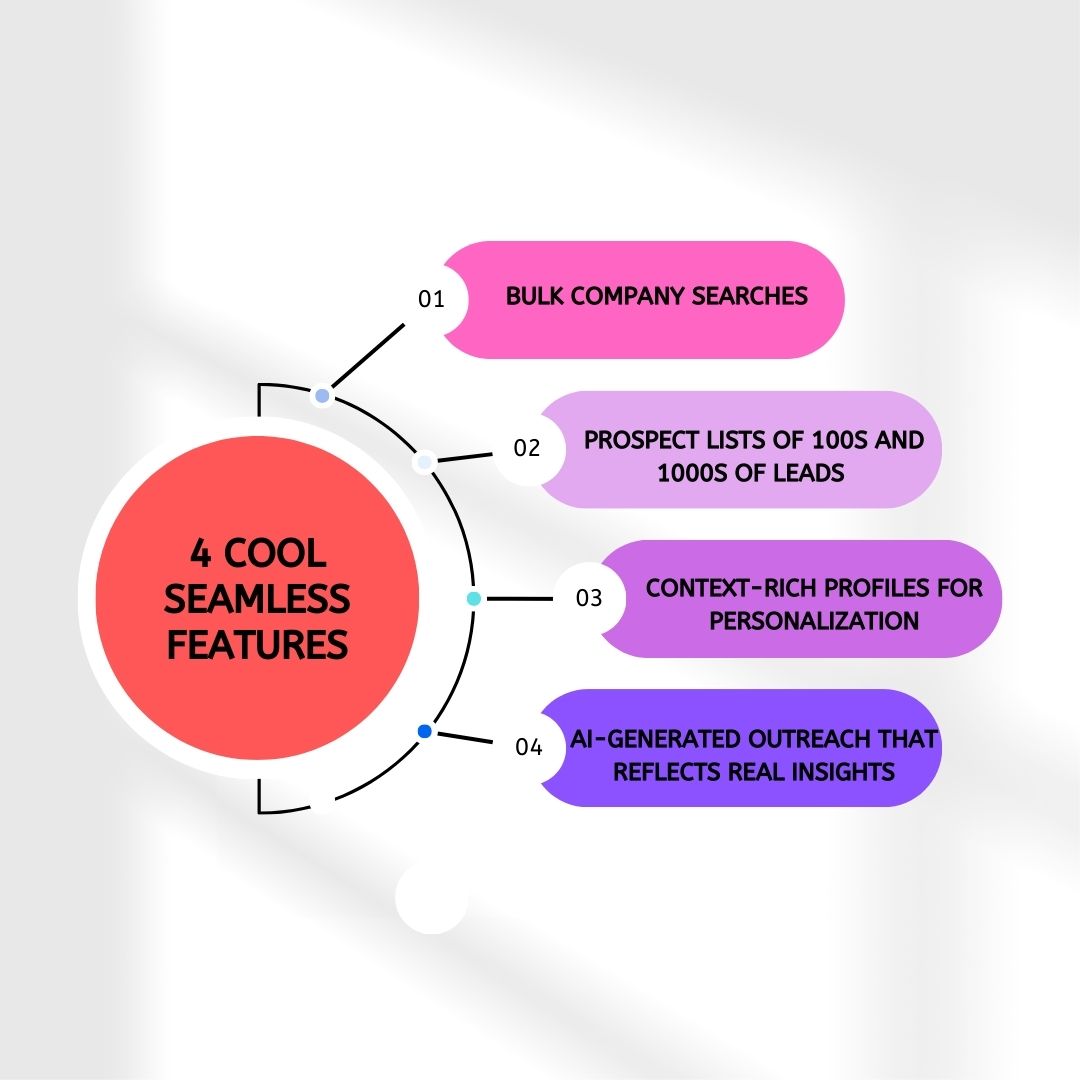
Just a few things you can do with Seamless as the ultimate generative AI tool
Rather than cold searching or stitching together lists from multiple sources, reps can pull verified leads in real time and layer generative AI insights on top, and auto-import to their CRM. That means:
Bulk company searches where you can find accounts at scale that fit your criteria
Prospect lists of 100s and 1000s of leads with accurate, fresh data in seconds
Get context-rich profiles that inform personalization (role, industry, recent hiring, funding signals) and enrich incomplete profiles
AI-generated outreach that reflects real insights, not guesses
Up to 30% of CRM records decay every year without enrichment, making verified data foundational, which is exactly what Seamless offers (MarketsandMarkets). Its core value is precision at scale, giving reps the data reliability they need to make generative AI outputs genuinely actionable.
ChatGPT (OpenAI)
ChatGPT remains one of the most widely adopted generative AI tools for prospecting workflows because it can craft context-aware messaging across channels (such as emails, LinkedIn scripts, follow-ups, and call templates) based on your prompts.
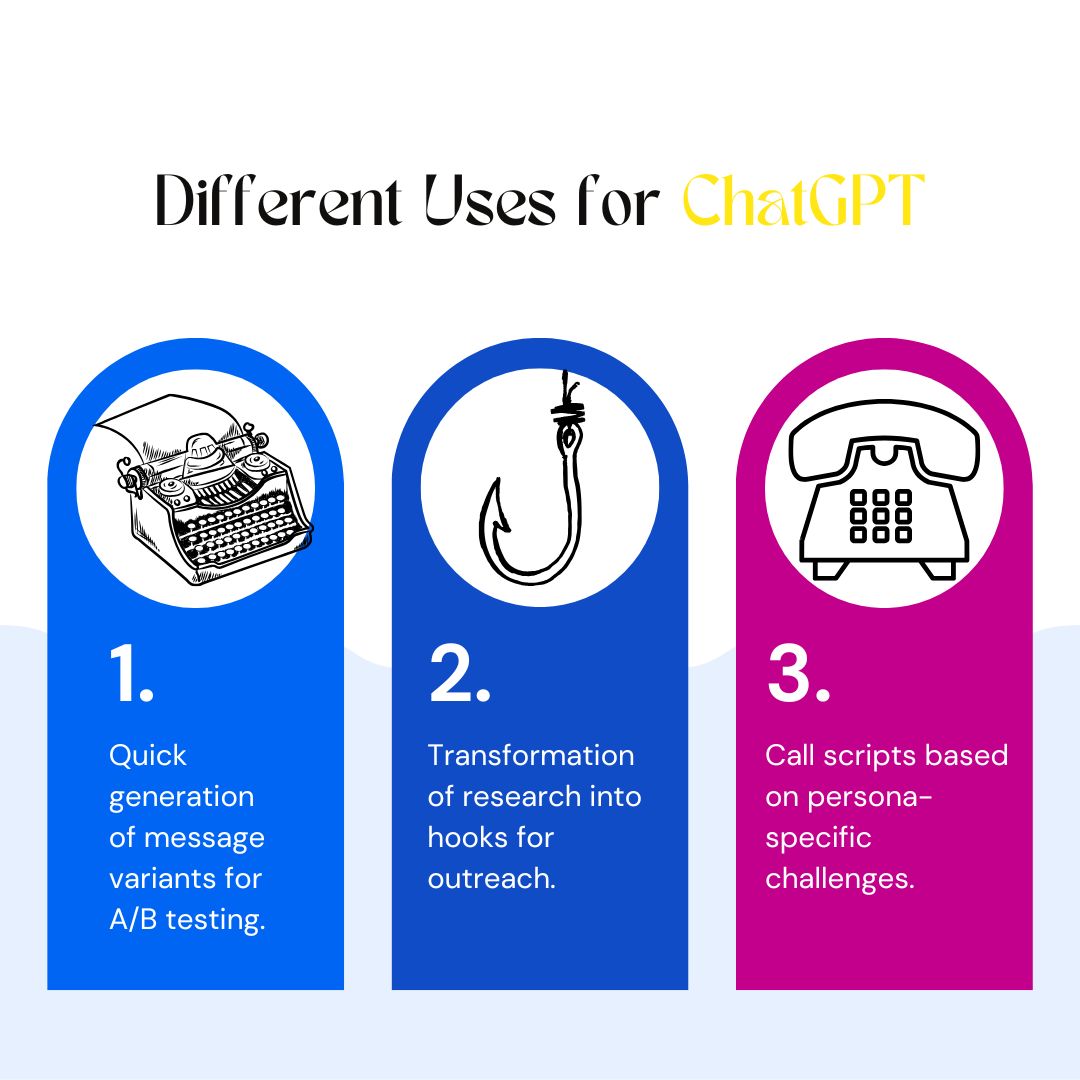
Reps can also instruct it to tailor tone, persona references, and value propositions for different segments. Consider using it for:
Integrate these tasks in your ChatGPT workflow
Quick generation of multiple message variants for A/B testing
Summarization of research notes into outreach hooks
Call scripts based on recent company news or role-specific challenges
ChatGPT’s power lies in flexible language generation. But without accurate data inputs, the resulting messaging risks sounding polished yet empty. That’s where pairing it with a tool like Seamless (which feeds real customer context from seniority level and tech stack to job history) produces better outcomes.
Even OpenAI notes that generative models can help sales teams, but emphasizes the need for human guidance to ensure brand integrity (OpenAI).
Modernize Prospecting With Generative AI + Seamless
Generative AI is only as effective as the foundation it’s built on. The smartest prompts, the most polished messaging, and the fastest workflows will all fall flat if the underlying data is unreliable.
That’s where Seamless plays a critical role. By providing verified, real-time contact data and rich account context, Seamless gives generative AI something it can actually work with. We believe AI should amplify strong selling, not compensate for weak inputs. When high-quality data powers your generative AI workflows, your team spends less time fixing errors and more time having the right conversations at the right moment.
Explore Seamlessand how it can help you start building conversations that convert today.
Sales intelligence and prospecting expert with years of experience to help sales teams grow and hit quota. Voted one of the top startups in America and rated as the highest software in Customer Satisfaction from G2 best software awards in 2025. Join our Reddit community for more product updates and sales tips. https://www.reddit.com/r/Seamless_AI/