Does the Name Ring a Bell? Why Tracking Company Name Changes Matters
Sal Surra
February 18, 2026
Company name changes aren’t anything new when it comes to branding. If you look at where some of the top brands in the world started, they would be completely unrecognizable. But somewhere along the way, they found their stride and figured out what worked for them.
Think about a world today with Pete’s Super Subs instead of Subway, or Brad’s Drink over Pepsi, it just wouldn’t be the same.
Recently, here at Seamless (formerly Seamless.AI), we rebranded and dropped the AI for a subtle, but much-needed change.
Seamless new logo and design
Sometimes these changes have a big impact, and companies have to completely re-market themselves (and update existing databases) to even get their audience’s attention.
It’s hard to imagine what changes like this can do for old company directories or sales pipelines. Sales teams might be unable to find the right contacts for an ICP, data would be inaccurate, and sales struggle to book deals.
That’s where having a game plan and the right partner, like Seamless, come into play. These changes don’t need to be a bottleneck for sales or slow down pipeline growth if you have the right data provider to deliver up-to-the minute data.
Let’s take a look at some of the most drastic (even controversial) name or rebranding changes in business, and how they navigated toward their ideal audience, along with data migration strategies.
Famous Company Name Changes
It’s not often companies that have already built an empire for themselves change their name or rebrand, but it happens from time to time, and it’s often met with mixed reactions at first. There are always going to be people who are totally uncomfortable with change and might not like the new direction. But there will be plenty that gravitate toward the new branding because it resonates with them.
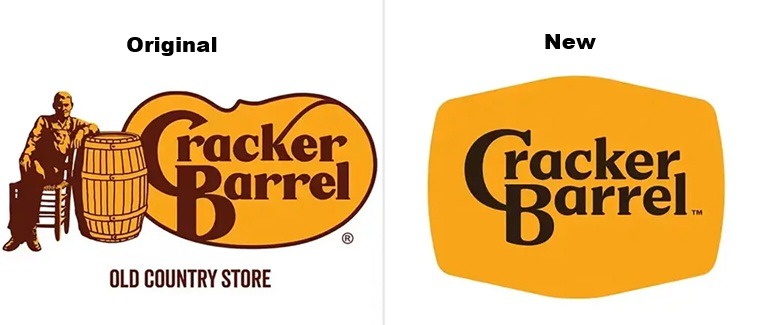
A prime example of the polarizing effect of rebranding was the recent makeunder, popular restaurant chain, Cracker Barrel underwent. Towards the end of 2025, Cracker Barrel dropped their country, ‘old-timer’ logo for a sleeker, more modern look and it was met with huge criticism and backlash to the point where they ended up having to revert back to the old logo.
Cracker Barrel logo changes
While Cracker Barrel’s rebrand was a miss, in recent years, there have been a couple of milestone company name changes along with rebranding that are great examples if you’re looking for some inspiration...
Recent good company rebranding
With each new generation, companies take an honest look at themselves and their public reception to ensure they can maintain their presence and market share.
Companies make updates to their logos and colors every decade or so to stay modern and relevant.
Apple Computers to Apple
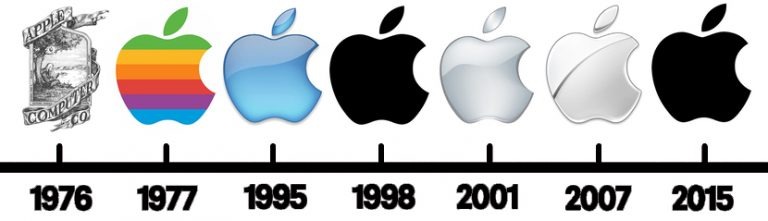
The iconic Apple symbol, for example, has gone through quite a few changes over the past couple of decades. Originally named Apple Computers, Steve Jobs decided in 2007 that the focus was no longer on just PCs, and changed the name to Apple.
In hindsight, this simple but bold move was clearly the right direction for them. Dropping “Computers” in the company name was a no-brainer and a great way to expand their ventures into a wider range of iconic products we all know, love, and use religiously today including the iPhone, iPads, AppleTV, and more.
Today, Apple’s stock makes it one the richest companies with the most recognizable icon and product line in the world.
Apple set out to show the world that they were more than just computers. The update was an obvious and necessary name change that has helped the Apple company continue growth without ever losing a step.
Apple is a great case study for companies with a lot of diversification. If it’s clear that your company is moving into a new direction that’s totally different from the product you started with, or you’re looking to reposition your brand, a name change might be a good idea to explore.
Seamless keeps alternative names for each company so we’re able to associate searches for either company name to the same company record, which makes it easier to find contacts and get the right data.
Seamless.AI to Seamless
While the recent name change for Seamless was practical and expected. When Seamless started back in 2016, there were many reasons to include AI in our brand name. Back then, there weren’t many companies using AI in their product so incorporating that aspect was smart and cutting-edge. But fast-forward to today, AI is everywhere and has taken on a whole new meaning that doesn’t necessarily represent what Seamless is about.
Seamless new look and colors
It’s good marketing as a start-up to get the website domain out there and make sure people can search and find the company page when needed. And once a brand owns their search, and has trained the models to know which brand to serve up for the queries, using the domain as the brand name doesn’t seem as helpful or necessary as it once did.
There are a lot of companies named just Seamless. As a new company, it made sense to stand out and give ourselves some unique footing, so it was a great idea to use Seamless.AI or Seamless AI as the brand name in the beginning, but today it’s the perfect time to drop the “AI” and just go by Seamless.
Regardless of which brand name you are looking to prospect to, Seamless has you covered with the most accurate data, best search filters, and direct outreach capabilities to make it easy to find, connect, and close.
Recent rebrands gone wrong
Changing company names doesn’t always go as well as Apple at first. There can be bumps in the road as these next companies found out.
Angie’s List to Angi
What seemed like a simple and practical evolution for the brand to drop ‘List’ from the main company name, wasn’t met with such ease. Unlike Apple, where the dropped part of the name wasn’t plaster all over their marketing. In the case with Angie’s List, it was marketed, branded, and sold as a list since it was created.
This marketing strategy wasn’t about diversification or necesity, it was just simply a refresh that no one, especially customers or clients, asked for.
The reason cited was as an evolution toward the parent company name, which was already called Angi Homeservices Inc., and owned other brands like HomeAdvisor.
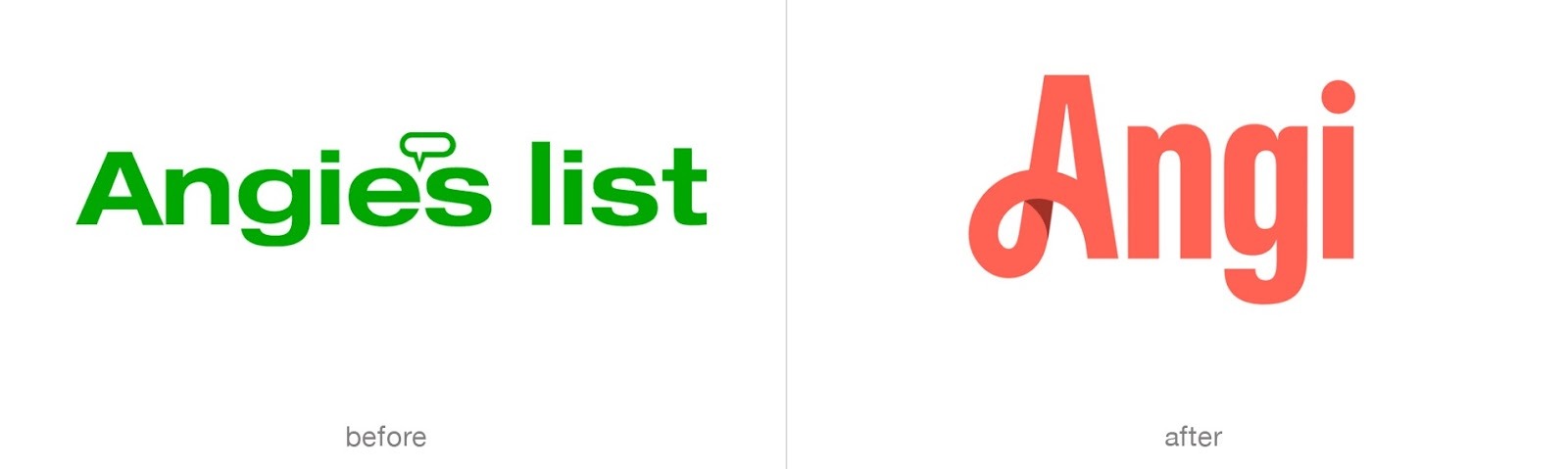
Angi logo changes
Taking a closer look at this name change, Angi was asking for a lot when expecting the audience to migrate or transition to the new brand. For one, this wasn’t just about dropping one word, but also changing the identity of the original namesake from Angie with an “e,” to just Angi. This would be like McDonalds changing their name to just Donalds.
Not only did they expect users to accept the “List” getting dropped (they really needed to rebrand the actual namesake to a new persona) but they changed the website domain on top of it all. Now users going on the web to find things would not see the recognizable brand or domain that they were accustomed to seeing, but were somehow expected to trust this new brand with no history.
What started out as an exciting refresh and push toward younger home buyers, was met with huge scrutiny and a lack of direction for the brand, as well as a considerable drop in stock performance since the change.
One lesson we can learn from the evolution of Angi is that changing a company name just for the heck of it or thinking it’s going to make things better might not go as great as planned.
Seamless makes it easy to build a list of companies including their subsidiaries by using the Seamless Autopilot feature that can make a list with just one click by using AI-powered capabilities.
Twitter to X
This one is kind of a head-scratcher because it came out of the blue, and there wasn’t really any cohesive strategy behind it. Elon Musk just had a whim and decided to rebrand Twitter into something he thought about years earlier with his first company PayPal.
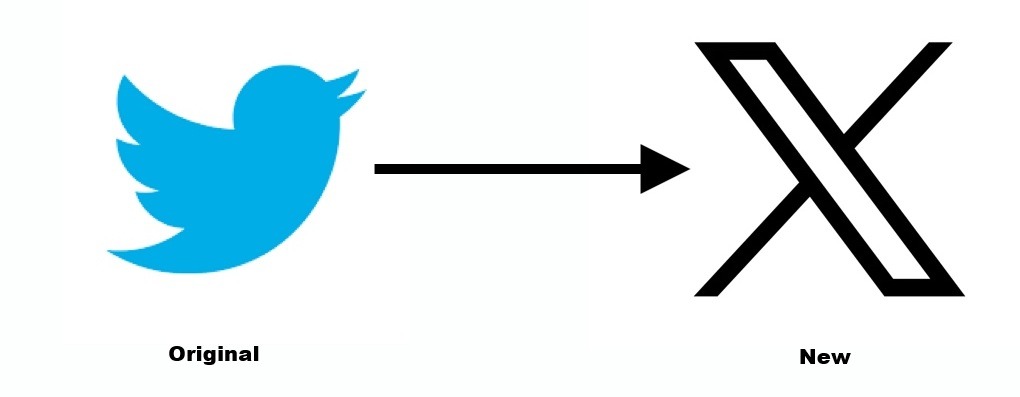
Old Twitter logo and new X logo
Twitter, with its beloved blue bird icon and catchy tweets was a big hit and there really wasn’t any reason to change that. Elon has a personal attachment to the letter X and thus he has branded all of his new companies into X and is now trying to roll them into his SpaceX company IPO coming up later this year.
From a marketing standpoint, this normally wouldn’t be a good idea, but if you are working for an eccentric billionaire, then company name changes are always a possibility. For these cases, data enrichment from Seamless is a great way to keep the current database accurate to make sure sales teams and marketers are getting the most helpful data.
Other Notable Business Name Changes
Here’s a list of significant company name changes over the last couple of years.
Ashley HomeStore to Ashley in 2023
Raytheon to RTX.com in 2023
All About Cats to Cats.com in 2023
TurnoverBnB to Turno in 2023
HBO Max to Max in 2023
Over time there have been a lot of really major changes that have impacted some of the most famous brands that we know today.
AuctionWeb to Ebay in 1997
Blue Ribbon Sports to Nike in 1972
Backrub to Google in 1997
Google to Alphabet in 2015
Kentucky Fried Chicken to KFC in 1991
Hewlett-Packard to HP in 2015
Handling Company Name Changes
Changing company names can be a dramatic and empowering option for businesses looking to get an edge over their competitors or carve out their own unique identity in their market. These changes have propelled many companies into new markets and helped turn them into iconic household names recognized by millions today.
It doesn't always go well at first, but as long as the brand message is true and consistent, it will resonate over time and find its audience.
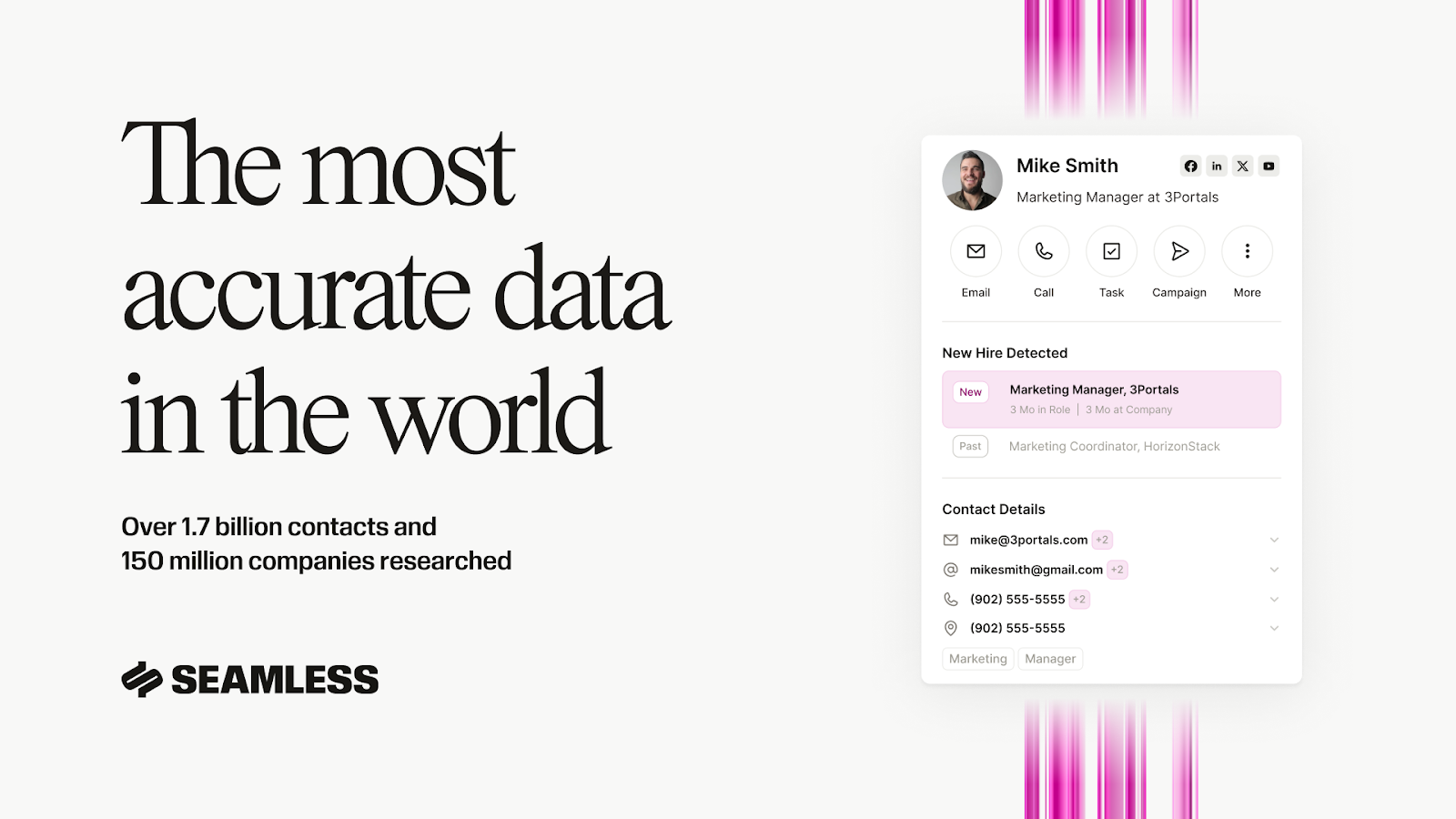
Name changes, like job changes, happen all the time in business. It’s good to know that when changes occur you have a partner that can monitor, capture, and update those changes so that your database is always accurate, reliable, and stable.
Seamless data enrichment
The new Seamless is here just at the right time. Ready to help your business secure the right contacts, connect with personalized outreach, and close more deals for revenue growth.
See what Seamless can do for you today by giving it a try for free. Or talk to one of our reps and get a demo. There is no obligation to try. Plans are customized for your needs.
Delivering value from high-quality content is one of the most important things to Sal. As an online marketing veteran for over 30 years with multiple degrees in business and communication, his passion for writing, marketing, business, sales and growth help to balance his experience and provide insights that are impactful.
Sal has worked with some the most recognizable brands in the world and helped produce content that has been seen by millions of people. In his spare time, Sal enjoys technology, search engines, video games, sports, cars and the rise of AI.