For years, SaaS (software-as-a-service) companies operated around a familiar model. If a business had a problem, whether it was high customer churn or bad sales forecasting, they would buy software to solve it. And then they hired people to use that software and do the work.
Need more outbound activity? Add more SDRs and buy more sales software licenses.
Need more marketing output? Hire another marketer and give them access to another platform.
That model drove the demand for software and dictated how it was priced and purchased.
But AI has started to drastically disrupt that old model and transform what we know as SaaS.
Welcome to what many are calling the “SaaS-pocalypse.” But is it something to fear? Is SaaS truly dead, and is AI the culprit? Or is AI just evolving SaaS into something newer, smarter, and better?
Keep reading to find out.
What Is the SaaS-pocalypse?
The SaaS-pocalypse sounds like it came out of another bad M. Night Shyamalan movie, but no zombies or ghosts are involved.
Back in February, there was a 48-hour selloff resulting in the SaaS industry losing $285 billion in valuations. When Wall Street experts started speculating what caused this selloff, they blamed AI and declared that AI agents would make the per-seat model and SaaS as we know it obsolete.
Is Saas Really Dead?
Things look grim right now for the SaaS industry, right? Not quite…
The SaaS-pocalypse doesn’t necessarily mean software is disappearing. It means that what we used to think SaaS was - that picture is rapidly changing. And what SaaS looks like 10 years from now will be less about how many people have access to a platform and more about this essential question: What result did the platform actually produce?
The Old SaaS Model Was All About Seats
Traditional SaaS economics were largely built around users.
If a scrappy startup with only 10 employees bought software, they needed 10 seats. And if they scaled their staff to 100 employees, they needed to buy another 80 seats. More employees always meant more software spend.
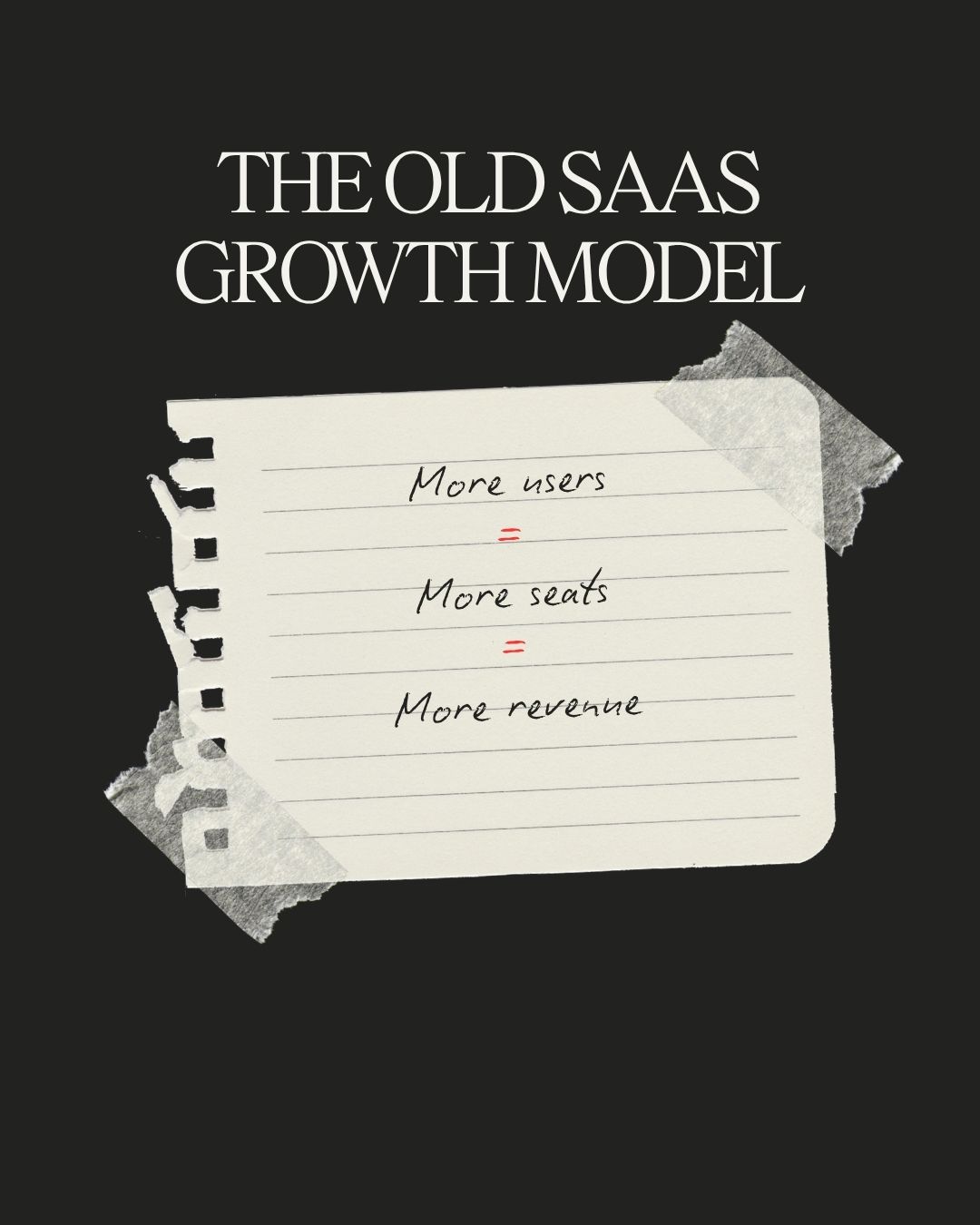
And for a lot of SaaS vendors, the growth equation was simple:
More users = More seats = More revenue.
But for customers, the equation has always been slightly different.
When you invested in a software tool in the past, it was never about the seats. You were buying the benefits and the wins that your employees could accomplish with that software.
No one really wants 50 licenses or another dashboard to try to make sense of.
What business leadership, from sales to marketing, always wanted was more pipeline, more demand, more qualified conversations, and more revenue.
For decades, we as buyers always had to bridge the gap between the software and the outcome. But AI is changing that equation…
Businesses Don't Need More Seats. They Need More Output.
Imagine a leader saying: “I need five more people working inside this software.”
That used to be a perfectly normal way to think about scaling. If you wanted to increase your output, you typically had to increase your headcount.
But partially because of AI and the economy, instead of prioritizing staffing, businesses are starting to rethink their internal processes and how they can get more done with less.
Questions like, "Can we drive the same results without adding five more people,” are top of mind for leadership. This focus on scaling productivity without scaling staffing doesn’t quell fears that AI will steal all our jobs. But instead of taking jobs, AI is fundamentally changing how we perform our jobs and what SaaS looks like.
Instead of simply giving an employee another tool, software can increasingly perform portions of the work itself, from research and automating workflows to analysis and personalizing outreach. And increasingly, AI agents can execute multi-step processes that previously required someone sitting in front of a traditional SaaS interface.
Software’s value is becoming less about access and the results you can achieve with the tool, and more about what the tool can execute based on the prompt you come up with.
AI Is Turning Software From a Tool Into a Worker
Legacy SaaS largely functioned as a tool that was only as successful as the value you could draw from it. In other words, whether or not a software tool was a winner or a dud was essentially up to you. You had to configure the workflows. You had to analyze the data and figure out what should happen next.
But with AI-native software, all you have to do is put together a strong prompt, and the AI does the rest.
That distinction matters. Consider prospecting for instance.
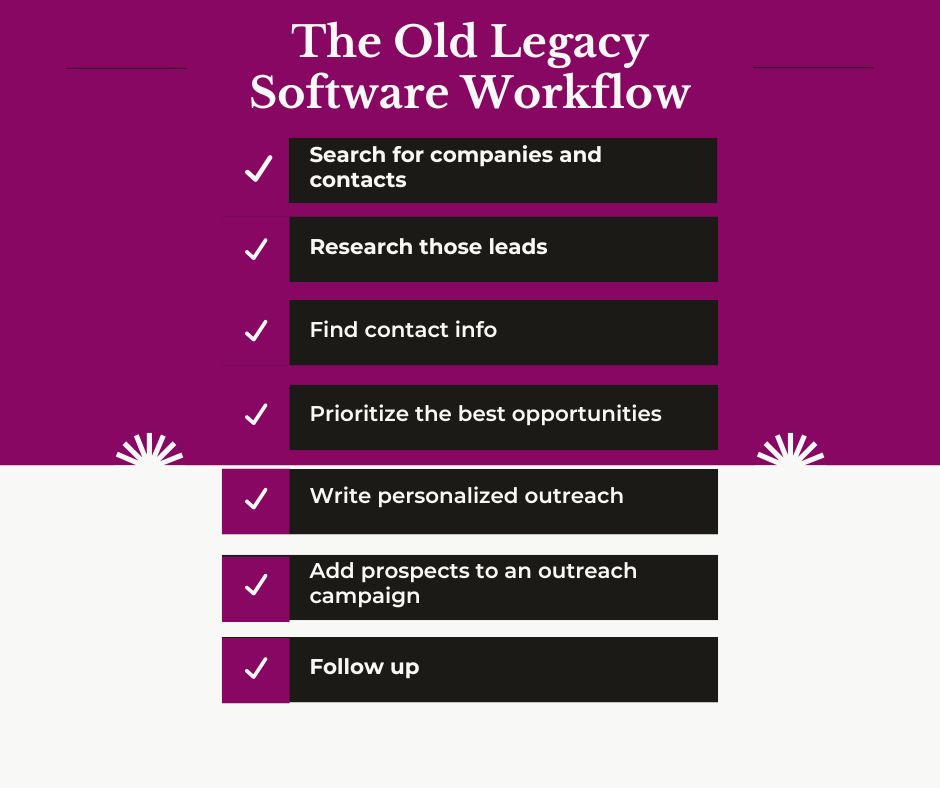
The old workflow with legacy SaaS might require a salesperson to:
- Search for companies.
- Identify the right contacts.
- Research those contacts.
- Find contact information.
- Prioritize the best opportunities.
- Write personalized messaging.
- Add prospects to an outreach campaign.
- Follow up.
Historically, SaaS companies sold tools that automated some or all of these tasks, so users can focus on more complicated work.
AI can now not only automate your busy work, but it can compress much of that workflow. So instead of giving a salesperson eight different tools and expecting them to stitch everything together manually, an AI-driven platform can increasingly complete this work in just a few commands.
AI is taking us from “Here are the tools. Figure it out” to “Here are the results. What else do you need?” and that’s an incredibly provocative pitch.
The Metric That Matters Is Changing
The shifts we’re seeing in AI mean that companies are also changing how they evaluate software.
Historically, businesses have looked at metrics like:
- Number of licenses
- Monthly active users
- Feature adoption
- Logins
- Seats deployed
These metrics still matter. If your product is overly complicated and onboarding requires a long ramp-up time, you’re going to have a hard time winning over customers, whether you use AI or not. But these metrics are becoming secondary to metrics tied directly to business outcomes.
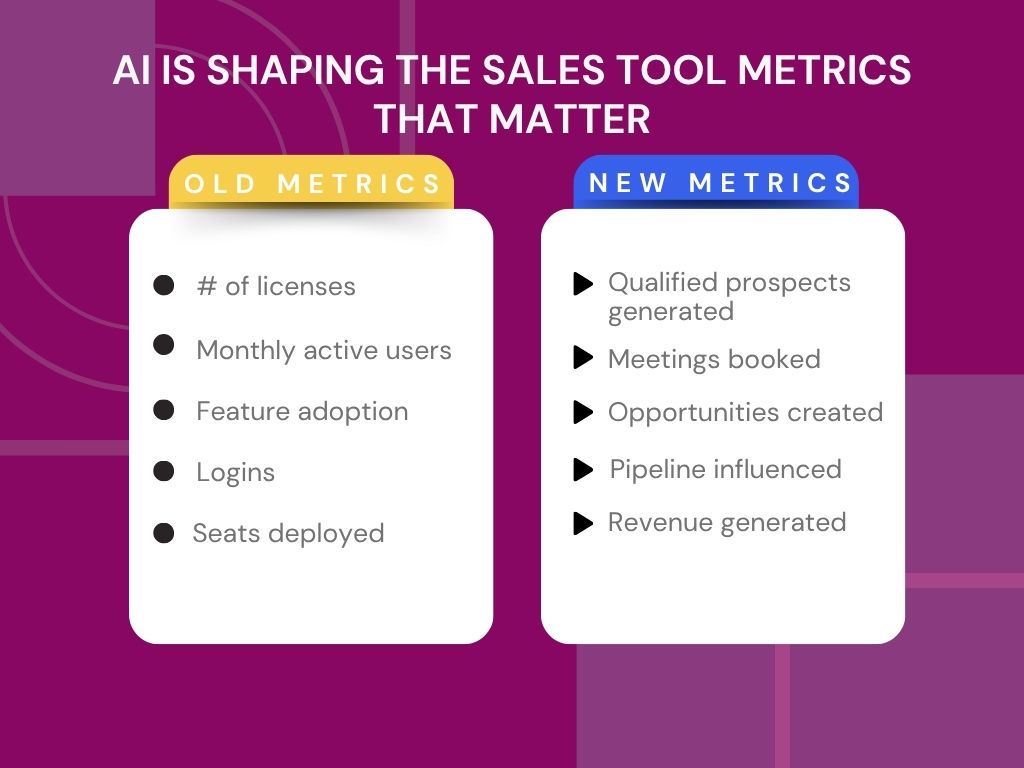
For sales technology, that could mean:
- Qualified prospects generated
- Meetings booked
- Opportunities created
- Pipeline influenced
- Revenue generated
And for marketing software, it could mean campaigns launched or pipeline created.
It’s like AI can act as your own personal assistant/intern, and that’s the deeper meaning behind the SaaS-pocalypse.
SaaS Isn't Dying. Passive SaaS Is Under Pressure.
With so much change happening every day, it would be easy to panic and jump to the conclusion that SaaS is disappearing. But a take like this might be a bit dramatic…
Businesses will continue buying software because businesses will continue to need software tools.
More importantly, while people are vibe coding and creating full-fledged apps, those apps still require a sound and secure architecture. “‘SaaS is dead’ thinking…conflates building a tool with running a platform. The two are fundamentally different jobs” (Forbes). Creating an app that can imitate some of the tasks of a legacy software is one thing, but honing in on dev and making sure that your vibe code app can actually function and run day in and day out is an entirely different beast.
So AI can’t replace a good software tool, but the difference-maker these days is that if your only value is a pretty interface that’s easy to use, your product might not be compelling.
Companies want a software tool that can cut out the busy work and drive some results. That means platforms built primarily around databases, dashboards, forms, and workflows may need to evolve.
The strongest software companies will likely combine traditional SaaS capabilities with AI. MCP (Model Context Protocol) servers are a great example of this because you can essentially access data from software tools like Seamless within LLMs like Claude and ChatGPT and use prompts to turn your data into action.
Related: 5 Sales Decisions AI Should Never Own
Results Are Becoming the Product
The SaaS-pocalypse is ultimately not about the end of SaaS. It is about the end of an era where simply giving employees access to software was enough.
The next generation of software needs to do more than store information or provide functionality. It needs to help create outcomes.
Because businesses don't really want more seats. And they don't want another tool employees have to remember to use.
They want results. And AI is helping fulfill that need.
This is where SaaS is heading.
And the companies that understand that shift early will be the ones best positioned for what comes next.