For nearly three decades, the sales software industry has been defined by applications.
CRM became the system of record. Marketing automation followed. Sales engagement platforms emerged. Data providers, forecasting tools, conversation intelligence, customer success platforms, and dozens of specialized applications filled out what became known as the modern revenue stack.
Each solved an important problem. And each competed to become the destination where work happened.
That model served the industry well.
But artificial intelligence isn’t just about automating the busy work that no one wants to do. It’s fundamentally changing the architecture of software. We're moving from a world of software platforms to one of interconnected intelligence.
The next generation of revenue technology won't be measured by how many features live inside a single application. It will be measured by how effectively intelligence flows between applications, AI agents, workflows, and people.
In this article, we’ll explore how AI is transforming the revenue stack from a collection of disconnected applications into an interconnected intelligence ecosystem, and how real-time data is at the root of it all. If you’re interested in learning what this shift means for the next generation of revenue technology, keep reading.
The Revenue Stack Is Becoming an Ecosystem
Today's sales organizations rarely operate from just one platform.
A sales representative may identify prospects through one application, enrich through another, orchestrate outreach in a third, and trigger workflows through n8n or Make.
Then, when they get to outreach, they have to generate messaging with ChatGPT or Claude, sync activity into a CRM, and monitor pipeline health through yet another system.
If you kept count, that’s A LOT of applications to balance. Increasingly, AI is becoming the connective layer that bridges the gap among all of those technologies.
Rather than asking software to perform individual tasks, organizations are building intelligent systems capable of researching accounts, identifying buying signals, generating outreach, enriching records, and orchestrating entire workflows with minimal human intervention.
This shift changes an important assumption.
Today's core software question
The question is no longer:
"Which application should own the workflow?"
The question now becomes:
"Where does the intelligence come from?"
"In an AI-native world, the value shifts from where work happens toward the quality of the intelligence powering the work."
That distinction matters because every workflow, whether executed by a person or an autonomous AI agent, is only as valuable as the information it receives.
Data Is Becoming the Foundation of AI
Artificial intelligence has accelerated nearly every aspect of modern sales.
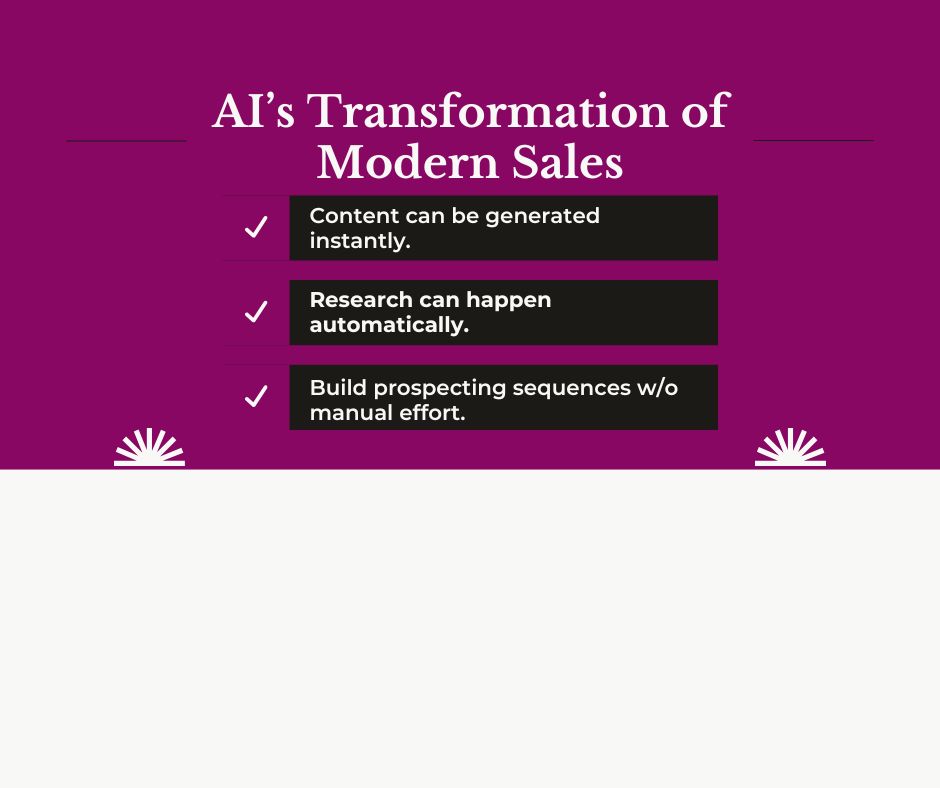
AI has completely changed the way we think about sales
Content can be generated instantly.
Research can happen automatically.
Entire prospecting sequences can be orchestrated without manual effort.
AI cannot compensate for poor data. 79% of sales organizations miss their sales forecast by more than 10% due to data deficiencies.
Outdated contact information, incomplete company records, stale organizational structures, or inaccurate buying signals simply produce faster, more scalable mistakes.
The intelligence layer underneath every revenue workflow has become more important than ever. Fresh, trusted business data is no longer a supporting component of the revenue stack. It is becoming its foundation.
Building a B2B Intelligence Ecosystem
At Seamless, this shift has significantly influenced how we think about our role in the market.
We're not simply building another sales application. We're building a B2B intelligence ecosystem designed to power the modern revenue stack, wherever work happens. That means investing deeply across every layer of how organizations and AI systems consume business intelligence.
Our AI-native platform gives revenue teams access to verified company and contact intelligence inside the workflows they use every day.
Our enterprise API allows developers and software teams to embed Seamless intelligence directly into their own products, workflows, and customer experiences.
Our agent-ready Model Context Protocol (MCP) server enables AI assistants, autonomous agents, and orchestration platforms to retrieve trusted business data naturally as part of their reasoning and execution.
And our growing network of strategic technology partnerships ensures people can use Seamless intelligence across the AI ecosystem instead of using it in isolation.
These aren't standalone products. They're components of a single vision.
"We're creating a B2B intelligence ecosystem that powers the revenue stack, whether the work is being performed by a salesperson, a workflow, or an autonomous AI agent."
One Intelligence Layer
Perhaps the most significant architectural change underway is this: Organizations no longer want multiple versions of business truth. They don't want one dataset in their CRM, another in an AI workflow, another in an automation platform, and yet another in a sales application. Every inconsistency creates friction. Every discrepancy in data reduces confidence. Modern revenue organizations need a single source of trusted commercial intelligence that every application, workflow, and AI system can not only reference but trust.
They want consistency. They want confidence. They want one trusted intelligence layer that every system consistently depends on.
That is precisely how we think about Seamless. A single intelligence layer, built to power both humans and AI systems, and more importantly, engineered as foundational infrastructure, not just another destination application.
When a revenue representative searches for a prospect, they should access the same trusted intelligence that an AI sales agent retrieves through an MCP server. The API feeding a partner application should expose the same verified data that powers an enrichment workflow or an automated outbound campaign. These are different interfaces and different consumers. All powered by one intelligence fabric.
Infrastructure for the Next Generation of Revenue Teams
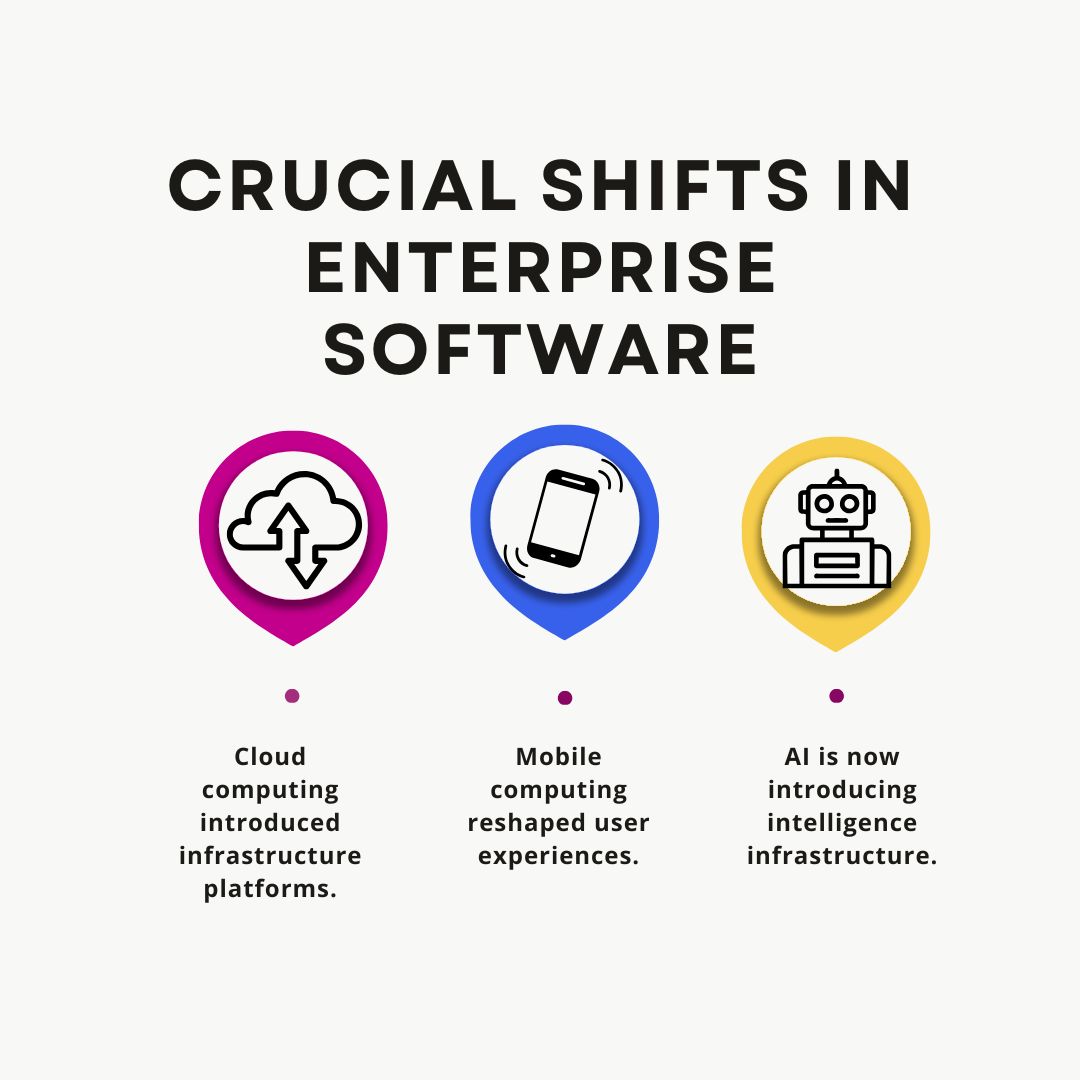
History suggests that every major shift in enterprise software creates a new foundational layer.
Just a few changes enterprise software has gone through
AI is now introducing intelligence infrastructure.
The companies that define the next decade won't necessarily be the ones with a laundry list of features. They will be the ones providing the trusted data, context, and intelligence that every workflow depends upon.
That's the opportunity we see at Seamless.
As revenue teams increasingly blend people, AI assistants, autonomous agents, and automated workflows into a single operating model, access to trusted B2B intelligence becomes more, not less, important.
Our commitment is simple.
To build the intelligence infrastructure that powers modern revenue teams. Not just through an application, but through an ecosystem. One intelligence layer, powering the entire revenue stack.
On August 11th, Seamless will host a webinar showcasing our new MCP toolkit, and the incredible tech ecosystem our engineers are building. Register here and be the first to see the power of our MCP.
Head of Product and Engineering at Seamless. Seasoned software product professional with deep expertise in digital product development, marketing, and management. From co-founding an interactive marketing startup in college to leading product at Seamless, he’s spent nearly two decades driving innovation across software, retail, sales, and eCommerce. His work includes leading digital initiatives for Fortune 500 brands like Nationwide, Scotts Miracle-Gro, and Sleep Number.