Your Pipeline Is Lying to You — Here's How to Read It Right
Seamless Team
August 12, 2026
When it comes to sales forecasts, it feels good when the charts are green, activity is high, and the pipeline looks healthy. The forecast suggests the team is on track, so leadership begins making plans around the revenue expected to come in. Then the quarter closes, and the results tell a different story. When that happens, the issue may be sitting in the information behind the forecast.
The old adage “Garbage in, garbage out” remains true, whether you’re talking about the data feeding artificial intelligence (AI) or the numbers feeding your sales pipeline. Traditional forecasting is so flawed. In fact, as many as 59% of sales forecasts are fundamentally incorrect.
This means that if your data is inaccurate, strategy, budget, and even hiring decisions might all be flawed, and your team is operating in the dark. In 2026, that’s just not good enough. If the data underlying decisions improves, the decisions improve with it. In this article, we’ll break down why common pipeline metrics can be misleading, the warning signs that your forecast may be unreliable, and how better data ultimately leads to better decisions.
Why Pipeline Metrics Can Be Misleading
Sales teams often hear that selling is a numbers game and that more activity will eventually produce more revenue. But that thinking can place too much emphasis on vanity metrics, and vanity metrics (as the name suggests) can be misleading.
Numbers like tidal calls made and pipeline value might look like progress, but they don’t illustrate whether buyers are actually moving forward.
Activity Doesn't Always Mean Progress
One thousand calls are unlikely to convert into meaningful meetings if sellers have not defined the ideal customer profile (ICP) behind their targeting.
One hundred meetings will struggle to become qualified demos when the team has not uncovered a clear need, and even a strong product demo may stall when it does not reflect the prospect’s priorities. Activity matters, but it needs to connect to evidence of real buyer progress.
Your CRM Only Knows What It's Given
Dashboards, even with all the bells and whistles, can only reflect the information they receive.
Remember that prospect you forgot to set to “closed-lost” because the contact moved jobs? It is still there, adding $200,000 to your pipeline three quarters later. That’s a false sense of security that you don’t really have. Smoke and mirrors.
Customer relationship management (CRM) data needs to be updated as close to real time as possible, so you have a clear, accurate snapshot of where you’re at and where you need to go next.
Bad Data Creates False Diagnoses
Any static or manually maintained data source can become outdated as people change jobs and companies reorganize. A sales manager may pass an older list of 100 contacts to a new rep with every expectation that it will create a strong pipeline. The rep can still generate activity against those records, but some contacts may have moved on or no longer fit the intended audience. The resulting pipeline can appear healthier than the opportunities behind it actually are.
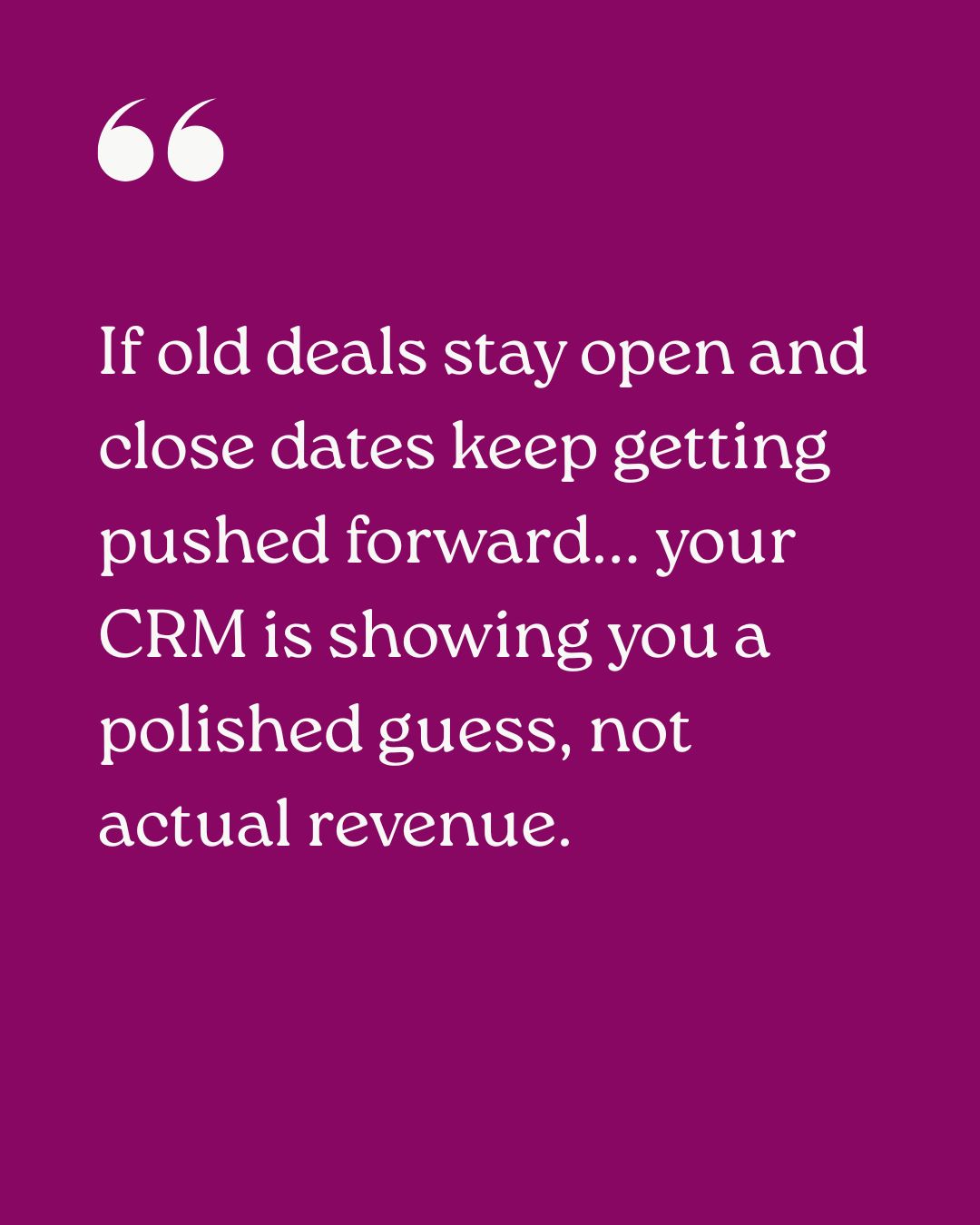
A full pipeline can look highly reassuring on a Tuesday morning dashboard, but volume does not always equal opportunity. If old deals stay open and close dates keep getting pushed forward without buyer evidence, your CRM is showing you a polished guess, not actual revenue.
Research has found that poor CRM data quality can cost organizations an estimated 15% to 25% of their potential annual revenue through stalled deals and misdirected outreach. Rather than assigning blame, sales leaders should look for the warning signs that the information behind the pipeline needs attention.
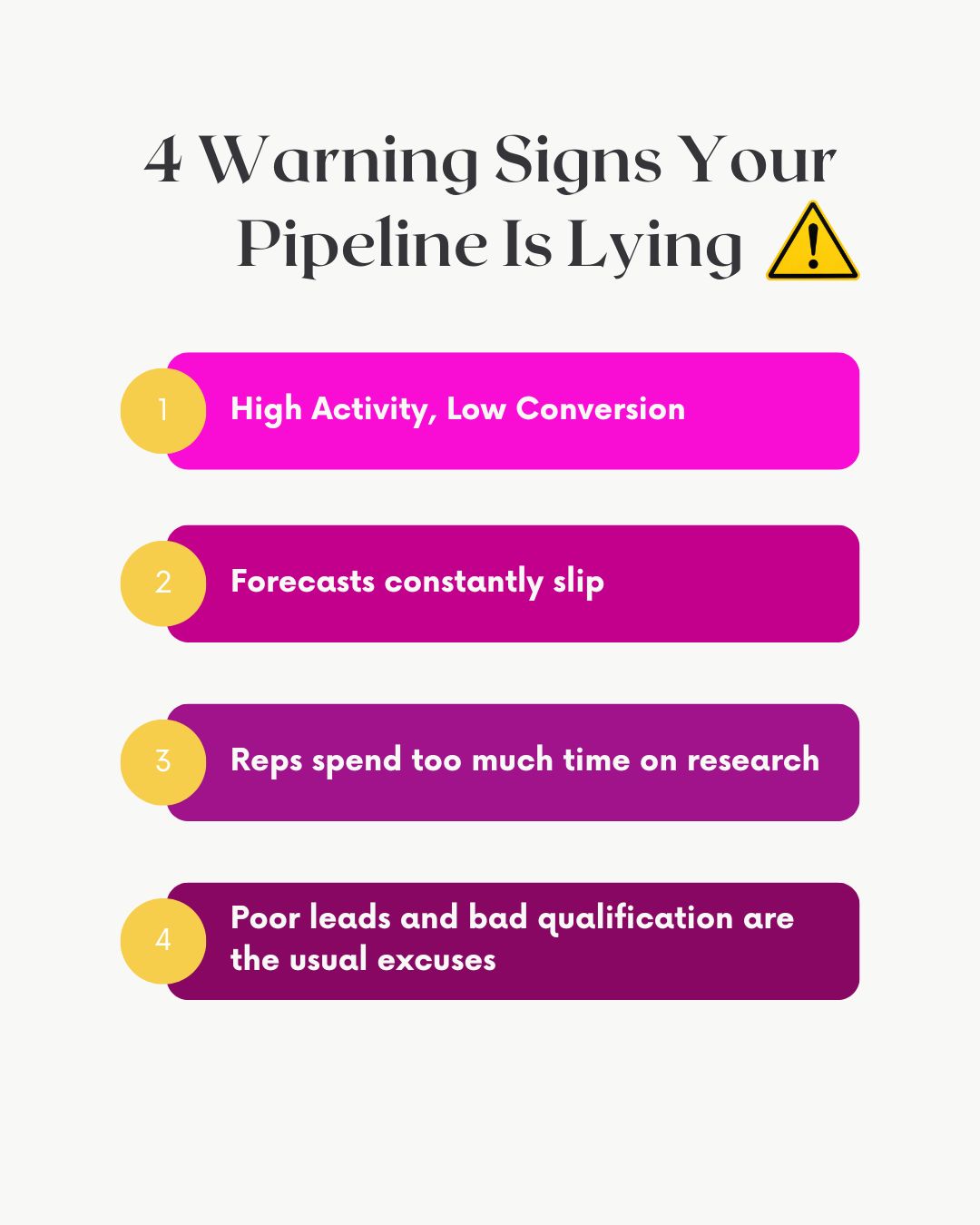
Four Warning Signs Your Pipeline Is Lying to You
Naturally, management will be frustrated by inaccurate reporting and apply pressure to sales team leaders to rectify this issue. Without proper tools and support, it can be difficult to know where to start. Sales reps and leaders can use these four signs to identify when your pipeline might be less than honest and unhealthier than forecasted.
Check for these pipeline red flags 🚩
High Activity, Low Conversion
Most modern CRMs can quickly identify opportunities that have received repeated outreach without progressing. When that pattern appears, leaders should review the information behind the outreach alongside the messaging and timing.
The contact may have changed roles, the account may no longer fit the ideal customer profile, or the buyer may not have shown enough interest to justify keeping the opportunity active.
Forecasts Constantly Slip
A genuine opportunity may move into the following quarter because the buying process took longer than expected. Repeated movement is more concerning when the close date is unsupported by a buyer-confirmed timeline or the CRM does not reflect the current decision-makers.
In those cases, the forecast may be carrying an internal expectation that the customer has never committed to.
Reps Spend Too Much Time Researching
Verifying information, searching for current phone numbers or email addresses, and correcting basic record errors waste precious time that sellers could spend preparing for conversations or advancing opportunities. Some research will always be part of the job. After all, you never want to reach out to a buyer with generic messaging. But excessive verification might be an indicator that your data is unreliable.
Poor Lead Quality and Qualification Become the Default Explanation
“The leads were poorly qualified” can become a default explanation when opportunities fail to close.
Before accepting that diagnosis, leaders should confirm that the team qualified the account using current information about the contact’s role and the company’s fit.
Nothing can replace discovery, not even accurate data, but reliable data still gives the qualification process a more dependable starting point.
All of these issues contribute to sales reps spending more than 27% of their productive time dealing with inaccurate or incomplete data, according to Salesmotion. That’s time you can never get back.
Why Better Data Creates Better Decisions
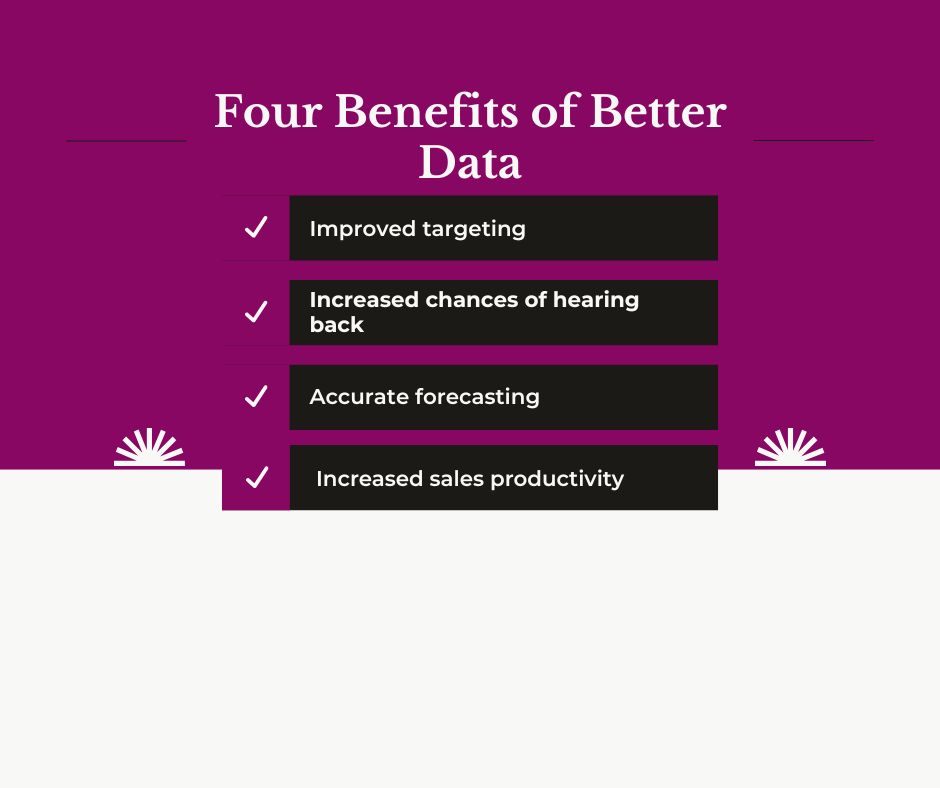
It goes without saying that better data leads to:
Better Data = Better Decisions
Improved targeting
Increased chances of hearing back
Accurate forecasting
Increased sales productivity
Improving those outcomes requires ongoing attention to the data behind the pipeline.
Sales leaders should review stale contacts, duplicate accounts, placeholder entries, and opportunities with repeatedly extended close dates, while making sure leads are qualified against current information. Clear ownership for CRM hygiene keeps that work from becoming an occasional cleanup and can strengthen the forecast itself.
Gartner research cited in the brief found that organizations with stronger data-quality standards improved forecast accuracy by up to 30%.
Reading Your True Pipeline Before It Reads You
Measuring the right signals at the right time is essential to understanding pipeline health. Leadership should review whether its existing metrics reflect buyer progress and whether the records behind those metrics remain current.
Contact information changes continuously, which helps explain why nearly 90% of B2B organizations use two or more data enrichment tools because maintaining accuracy requires more than a one-time review of the database.
Wrapping It Up
Better data supports better decisions and gives sales leaders a more accurate view of the opportunities their teams are working. Because static contact records become outdated over time, maintaining that view requires ongoing verification.
Seamless.AI’s CRM Enrich helps teams keep CRM records current, while Total AI gives sellers added confidence in the contact information guiding their outreach. Together, they help reduce the manual data work that can slow sellers down and weaken pipeline visibility.
Seamless.AI helps outbound sales teams prospect five to 10 times faster, while its data filters support 20% to 30% higher contact success rates.See Seamless.AI in Action to explore the broader platform, or Learn How CRM Enrich Works to dive deeper into the data enrichment capabilities behind a more reliable pipeline.
Sales intelligence and prospecting expert with years of experience to help sales teams grow and hit quota. Voted one of the top startups in America and rated as the highest software in Customer Satisfaction from G2 best software awards in 2025. Join our Reddit community for more product updates and sales tips. https://www.reddit.com/r/Seamless_AI/